

Nissan Ariya vs Hyundai IONIQ 5: Oak Lawn EV Matchup
The electric vehicle revolution has firmly taken root in Oak Lawn, with more silent, zero-emission vehicles cruising down 95th Street every day. For local buyers ready to leave the gas pump behind, the decision often comes down to two of the most stylish and capable crossovers on the market: the Nissan Ariya and the Hyundai IONIQ 5. Both vehicles represent the pinnacle of their respective brands’ engineering, offering futuristic designs and impressive range estimates. However, living with an EV in the Midwest where winters are harsh and potholes are plentiful requires more than just a cool aesthetic. It demands a vehicle with robust thermal management, a comfortable ride that isolates you from broken pavement, and an all-wheel-drive system that instills confidence on icy tollways. While the Hyundai IONIQ 5 garners attention for its retro-pixel styling and fast charging speeds, the Nissan Ariya focuses on a “Timeless Japanese Futurism” philosophy, prioritizing a serene, lounge-like interior and a driving experience that smooths out the rough edges of the daily commute. This comparison dives deep into the specs that matter most to Oak Lawn drivers to see which EV truly delivers the better ownership experience.
Range, Batteries, and Charging Speeds
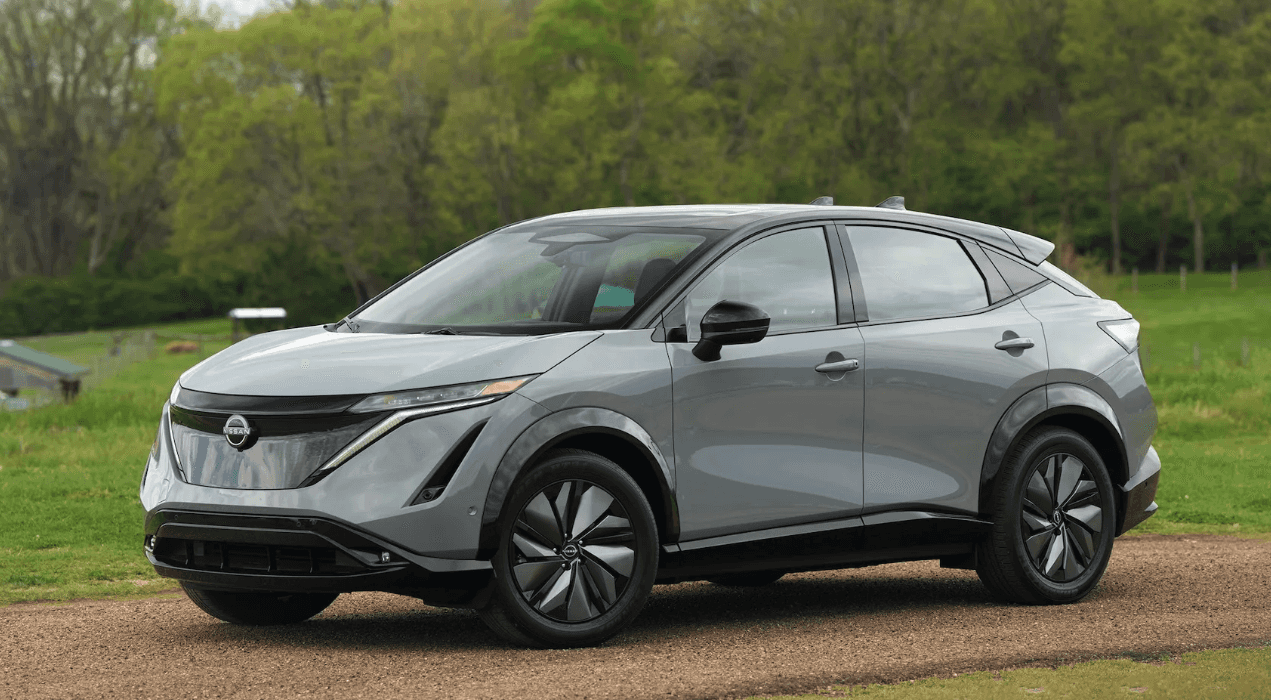
Range anxiety is the number one concern for first-time EV buyers in Oak Lawn, and both the Ariya and IONIQ 5 offer battery packs designed to alleviate these fears. The Nissan Ariya offers a choice between a standard 63 kWh battery and a long-range 87 kWh battery. In its most efficient front-wheel-drive VENTURE+ trim, the Ariya achieves an EPA-estimated range of up to 304 miles. This is a crucial number for local drivers, as it means you can easily commute to downtown Chicago and back for several days without needing to plug in. The Hyundai IONIQ 5 also offers competitive range figures, generally maxing out just over 300 miles for its long-range RWD trims. However, where the Ariya distinguishes itself is in the consistency of its range prediction. Nissan has leveraged over a decade of EV data from the LEAF to create a “Distance to Empty” algorithm that is remarkably accurate, taking into account driving style, topography, and HVAC usage. This precision helps prevent the sinking feeling of seeing your range drop faster than you drive, a common complaint with some competitors who use overly optimistic “guess-o-meters.”
When it comes to charging, the conversation often revolves around peak speeds. The Hyundai IONIQ 5 boasts an 800-volt architecture that allows for incredibly fast charging at 350 kW DC fast chargers. While impressive on paper, these ultra-fast chargers are still relatively rare in the Oak Lawn area compared to the standard 50 kW and 150 kW stations found at local shopping centers and grocery stores. The Nissan Ariya uses a standard 400-volt system but maintains a flatter charging curve. This means that while its peak speed is lower, it can sustain a high charging rate for a longer portion of the session, rather than hitting a high peak and dropping off quickly. For the vast majority of owners who charge at home overnight using a Level 2 wallbox, the DC fast charging speed is a secondary concern. The Ariya supports 7.2 kW onboard charging, which easily replenishes the battery overnight, ensuring you wake up to a “full tank” every morning, ready for whatever the day brings.
Real World Winter Range
Living in Illinois means dealing with sub-freezing temperatures for a third of the year, and cold weather is the enemy of lithium-ion batteries. Chemical reactions slow down in the cold, reducing available range. Both the Ariya and the IONIQ 5 are equipped with battery heaters and heat pump systems (standard or available depending on trim) to mitigate this. A heat pump is far more efficient than a traditional resistive heater, as it moves heat rather than creating it, preserving battery energy for driving. However, the Ariya’s thermal management system is particularly robust. You can pre-condition the cabin and the battery via the MyNissan app while the car is still plugged in at your house. This draws power from the grid to warm up the battery pack to its optimal operating temperature before you unplug. By doing this, you start your drive with a warm battery, which means regenerative braking works immediately (it often doesn’t on a cold battery) and you lose significantly less range to the cold. The Ariya’s “Intelligent Route Planner” also factors in temperature and elevation to give you a realistic range estimate for winter road trips, ensuring you never get stranded in the cold.
e-4ORCE AWD vs Competitor Systems
All-wheel drive in an electric vehicle is fundamentally different from a gas car because there is no driveshaft connecting the front and rear axles. Instead, dual motors one on each axle work independently. Nissan calls its system e-4ORCE (pronounced “e-force”), and it is a masterpiece of software engineering. While the Hyundai IONIQ 5’s HTRAC AWD system is effective at providing traction, e-4ORCE goes a step further by managing the vehicle’s chassis dynamics. It constantly monitors traction and weight transfer. When you accelerate, most cars “squat” on their rear tires; when you brake, they “dive” forward. e-4ORCE uses regenerative braking on both the front and rear motors to counteract this pitch. By lightly applying the rear motor brakes when you stop, it keeps the car level, preventing the “head bob” motion that often causes motion sickness in passengers. This makes the Ariya feel incredibly planted and premium, gliding over imperfections rather than bouncing over them.
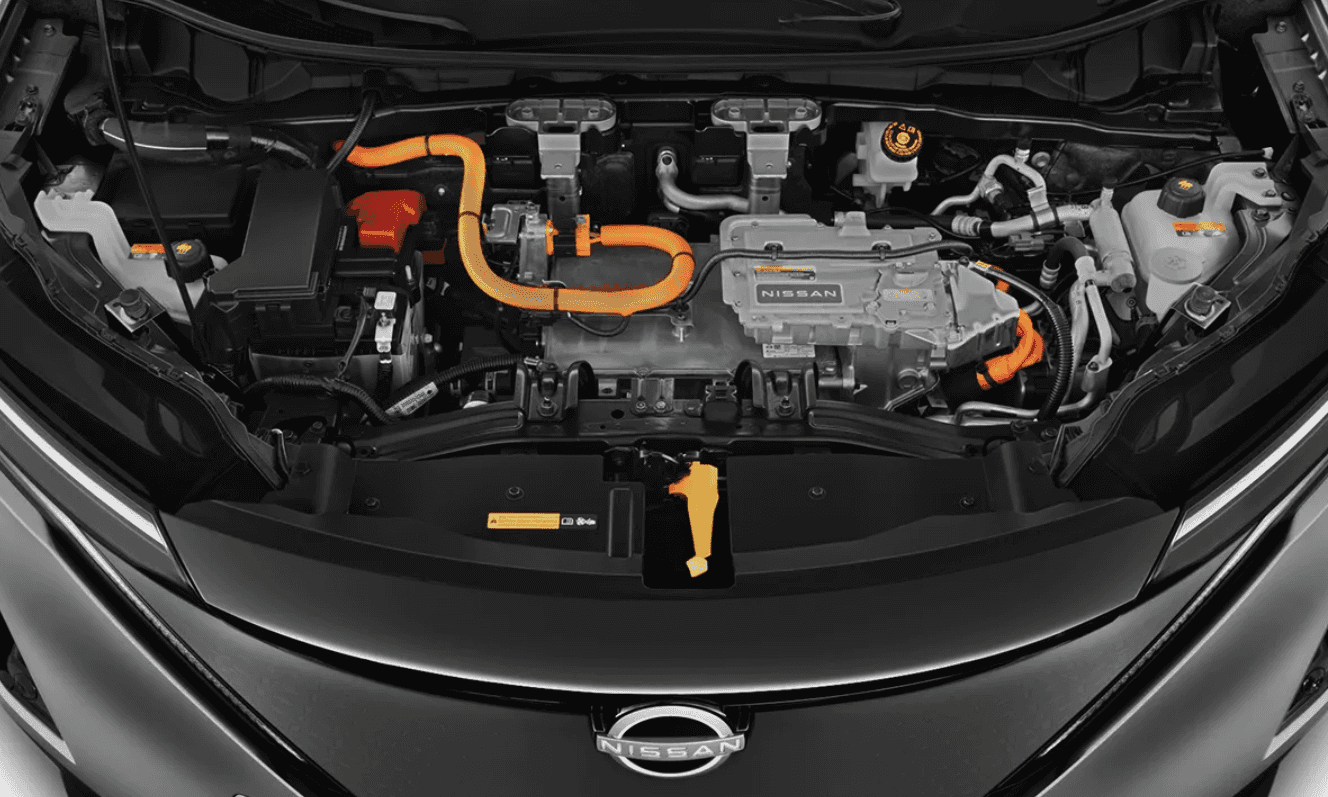
In terms of pure performance, the e-4ORCE system allows for precise vectoring of torque. On a snowy curve on Cicero Avenue, the system can send more power to the outside wheels and apply braking to the inside wheels to help the car turn. This happens thousands of times per second, far faster than a mechanical system could react. The result is a vehicle that traces your intended line with uncanny accuracy, even when the road surface is slick with slush. While the IONIQ 5 is a quick vehicle, often praised for its 0-60 times, the Ariya prioritizes control alongside speed. The power delivery in the Ariya is tuned to be linear and smooth, avoiding the jerky “snap” of acceleration that can be jarring in some high-torque EVs. This makes it easier to drive smoothly in heavy traffic or slippery conditions, where sudden bursts of torque can break traction. For the driver who values sophistication and stability over raw drag-strip numbers, the e-4ORCE system offers a superior daily driving experience.
Driving Dynamics in Snow
Driving an EV in the snow can be intimidating due to the instant torque of electric motors, which can spin tires instantly if not managed correctly. Both the Ariya and IONIQ 5 have dedicated “Snow Modes,” but the execution differs. The Ariya’s Snow Mode adjusts the throttle map to be extremely gradual, effectively dampening the pedal response to prevent accidental wheel spin. Combined with the 50/50 weight distribution inherent to the EV skateboard platform (batteries in the floor), the Ariya feels like a tank in winter conditions. The low center of gravity prevents the body roll that can unsettle an SUV on ice. Additionally, the e-4ORCE system’s ability to control brake pressure at each wheel individually means that if you hit a patch of black ice with just the left wheels, the system will instantly compensate to keep the car driving straight. Owners often report that the confidence level in an Ariya on all-season tires rivals that of traditional off-road SUVs, simply because the electric control is so precise and instantaneous.
Pricing, Incentives, and Ownership Perks
Navigating the financial landscape of EVs can be tricky due to fluctuating federal tax credits and manufacturer incentives. As of recent updates, the federal tax credit eligibility depends heavily on North American assembly. While the Hyundai IONIQ 5 has moved some production to the US, specific eligibility can vary by VIN and battery sourcing. The Nissan Ariya is built in Japan, which currently affects its eligibility for the purchase tax credit. However, a significant “loophole” in the Inflation Reduction Act often allows the $7,500 credit to be passed on to the consumer if they choose to lease the vehicle. Nissan has been aggressive in offering lease cash incentives that effectively lower the monthly payment to be very competitive with, or even lower than, the IONIQ 5. For Oak Lawn buyers who prefer to lease their tech a smart move given how fast EV technology evolves the Ariya often presents a better monthly value proposition when these incentives are applied.
Beyond the initial transaction, the ownership perks of the Ariya are substantial. Nissan offers the “EV Carefree+” package, which is a comprehensive suite of benefits designed to make the transition to electric easy. This includes included scheduled maintenance for a set period, tire hazard protection, and often a year of complimentary public charging with the EVgo network. EVgo has a strong presence in the Chicagoland area, meaning you can top up for free while shopping. Hyundai also offers charging credits with Electrify America, but reports of station reliability and congestion at those specific chargers can be mixed. Nissan’s extensive dealership network is another advantage. Kelly Nissan has invested heavily in EV certification, meaning we have specialized tools and technicians on-site. Some newer EV brands or less-established networks may have fewer certified service points, leading to longer wait times for repairs. Knowing you have a local team on 95th Street ready to support you adds a layer of security to your purchase.
Interior Comfort and Quietness
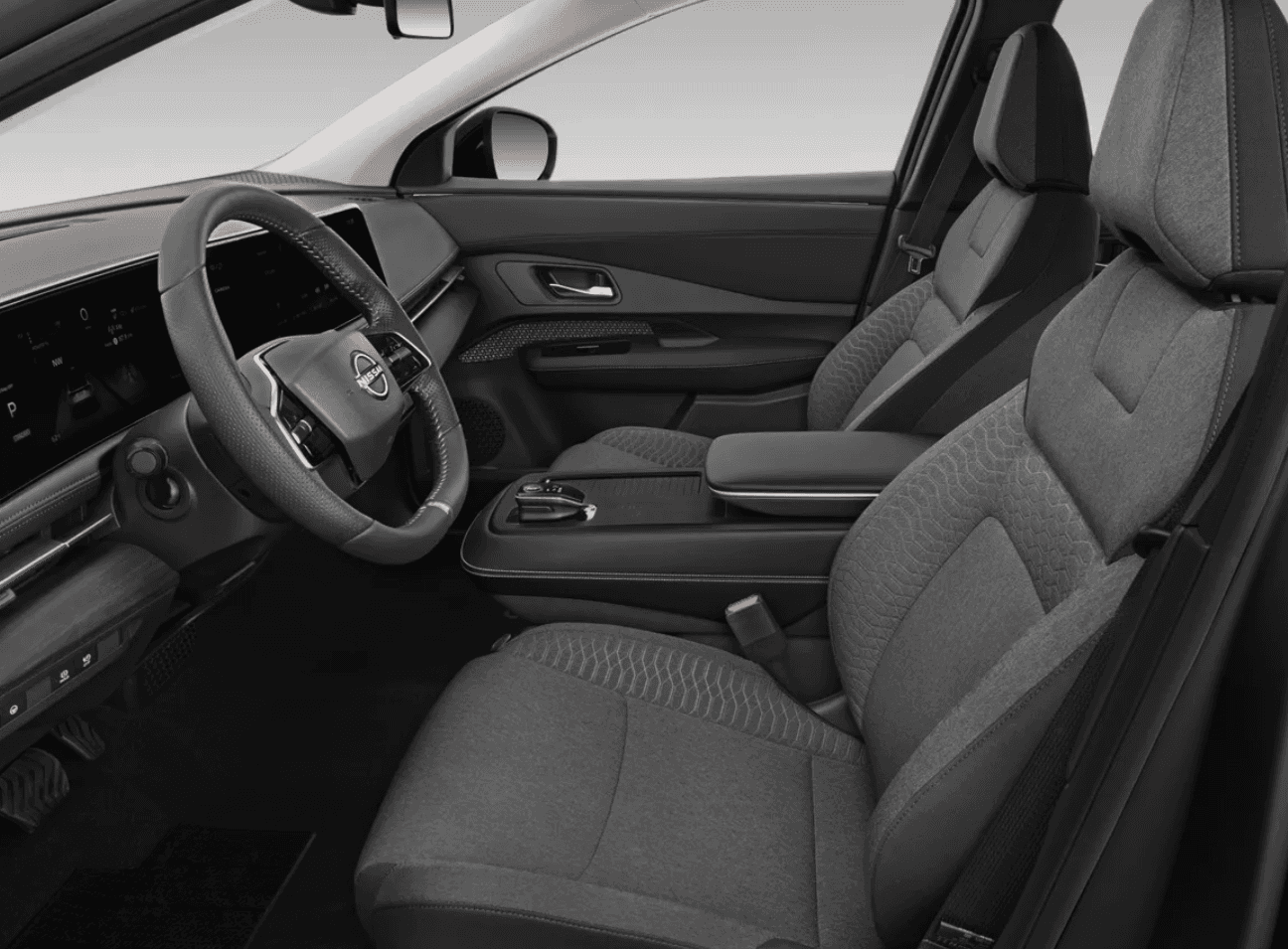
Where the Ariya truly leaves the IONIQ 5 behind is in the interior ambiance. Hyundai opted for a “retro-tech” vibe with a minimalist, open cabin that feels airy but can come across as slightly spartan with its hard plastics and simple geometric shapes. Nissan took a different approach, designing the Ariya as a “lounge.” The floor is completely flat and open, thanks to the moved climate control unit under the hood. The center console is power-sliding, allowing you to adjust the space between the front seats to your liking. The materials are undeniably premium, featuring Kumiko-patterned ambient lighting that glows through the wood trim a nod to Japanese craftsmanship. The seats are Nissan’s Zero Gravity™ design but with a slimmer profile, offering exceptional comfort without bulk. Acoustic glass is used generously to block out wind and road noise, creating a library-quiet atmosphere that is noticeably more serene than the IONIQ 5, especially at highway speeds on I-294.
Another thoughtful touch in the Nissan Ariya is the integration of physical controls mixed with haptic feedback. While the IONIQ 5 relies heavily on touchscreens for many functions, the Ariya integrates climate controls into the wood trim on the dashboard. They look like sleek, touch-sensitive icons, but they provide a satisfying haptic vibration when pressed, so you know your command was registered without looking away from the road. This blend of futuristic design and tactile usability is a hallmark of Nissan’s approach. The dual 12.3-inch displays are oriented in a wave shape, placing information easily within the driver’s eye line. The system also features Amazon Alexa Built-in, allowing you to control your smart home devices from your car turn on your porch lights in Oak Lawn as you turn onto your street.
Furthermore, the cargo utility in the Ariya is surprisingly practical. While the IONIQ 5 has a slightly larger total volume with seats down, the Ariya’s cargo floor is more versatile with the Divide-N-Hide system (available on select trims), allowing you to create separate compartments for groceries or charging cables. The power liftgate with motion activation makes loading easier when your hands are full. Unlike the IONIQ 5, which has a distinct hatchback shape that limits the height of items near the rear, the Ariya’s roofline allows for boxier items to fit more easily. For the practical needs of an Oak Lawn family hauling sports gear, Costco runs, and occasional furniture the Ariya’s storage solutions are well thought out and easy to use.
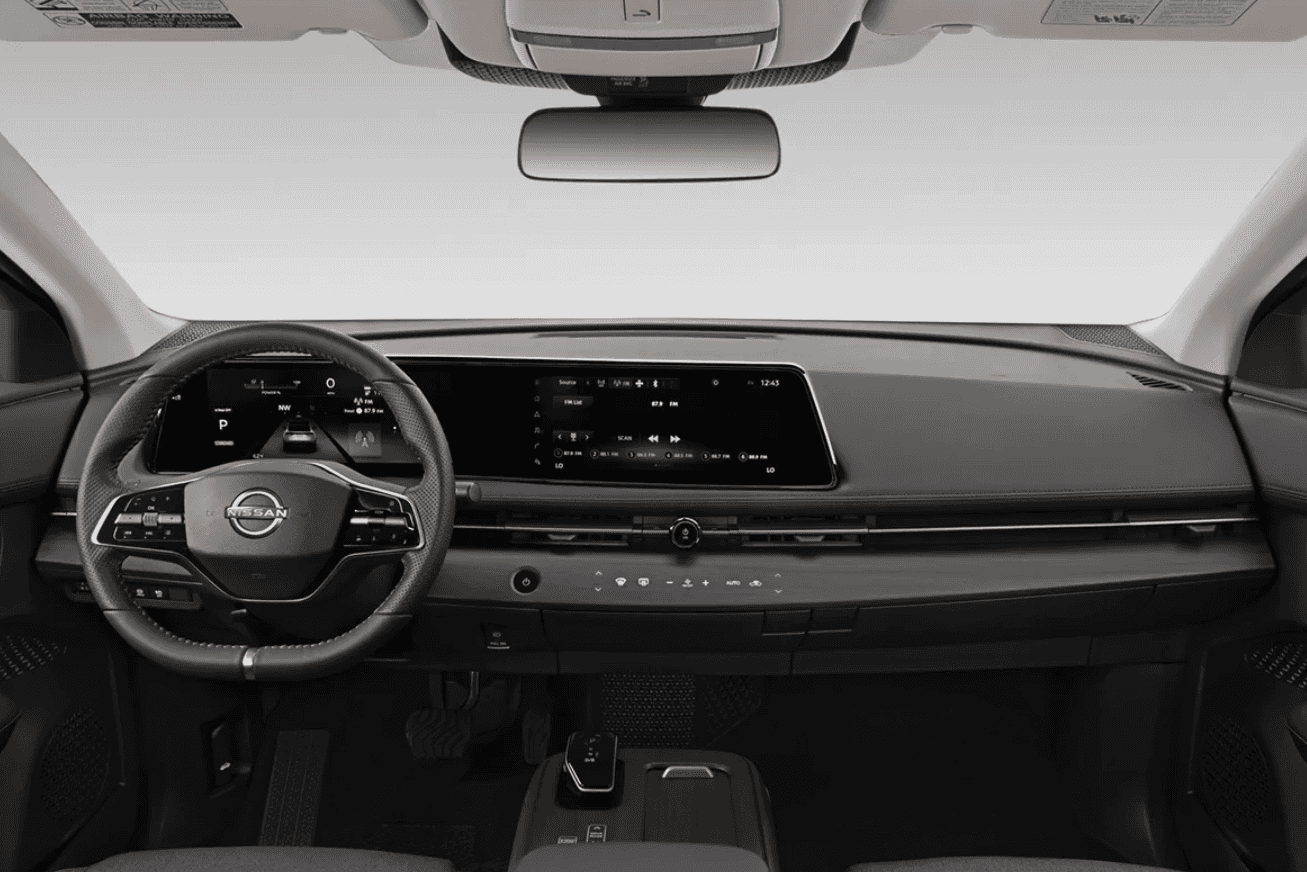
Finally, the transition to an EV is about lifestyle. The Ariya supports this with features like the available ProPILOT Assist 2.0. This advanced driver-assistance system allows for hands-off driving on compatible single-lane highways. While you must keep your eyes on the road, the system handles steering, acceleration, and braking, significantly reducing fatigue on long trips out of Illinois. The IONIQ 5 has excellent highway driving assist features as well, but Nissan’s system is often praised for its natural feeling and smooth lane centering. Combining this tech with the whisper-quiet cabin and smooth ride makes the Ariya one of the best road-trip vehicles in its class, turning a drive to Indianapolis or St. Louis into a relaxing journey rather than a chore.
Electrify Your Drive at Kelly Nissan
The choice between the Nissan Ariya and the Hyundai IONIQ 5 is a choice between two visions of the future. If you value a serene, premium cabin, smooth ride quality, and a trusted local dealership experience, the Ariya is the clear winner for Oak Lawn drivers. At Kelly Nissan, we are excited to show you the future of driving. Come visit our showroom to experience the “Timeless Japanese Futurism” of the Ariya firsthand. Test the e-4ORCE AWD on our local streets and let our EV experts explain the current lease offers that make switching to electric more affordable than ever.
0 comment(s) so far on Nissan Ariya vs Hyundai IONIQ 5: Oak Lawn EV Matchup