
Nissan Pathfinder Towing Capacity for Oak Lawn Drivers
For families in Oak Lawn, an SUV needs to be more than just a grocery getter; it needs to be an enabler of adventures. Whether you are looking to tow a boat to the Chain O’Lakes, haul a pop-up camper to Starved Rock, or simply pull a utility trailer for a weekend landscaping project, towing capability is a top priority. The Nissan Pathfinder has reasserted itself as a leader in the three-row SUV segment, not just for its passenger comfort, but for its genuine truck-like utility. With a maximum towing capacity of up to 6,000 pounds, the Pathfinder leaves many of its competitors like the Toyota Highlander and Honda Pilot in the dust. But understanding towing goes beyond just looking at the biggest number in the brochure. It requires knowing which trims offer which ratings, understanding the necessary equipment, and learning the best practices for safety. This guide breaks down everything Oak Lawn drivers need to know to tow confidently with their Nissan Pathfinder.
Engine and Tow Ratings by Trim
The foundation of the Pathfinder’s towing prowess is its powertrain. Every Pathfinder is equipped with a 3.5-liter Direct Injection Gasoline (DIG) V6 engine that produces 284 horsepower and 259 lb-ft of torque (with the Rock Creek edition boosting this to 295 hp and 270 lb-ft). Crucially, Nissan abandoned the CVT (Continuously Variable Transmission) for this generation in favor of a robust 9-speed automatic transmission. This traditional geared transmission is a huge advantage for towing, providing distinct shift points that allow the engine to hold power when climbing hills and utilize engine braking when descending. However, not all Pathfinders are rated to tow the same amount. The base Pathfinder S, SV, and SL trims have a standard towing capacity of 3,500 pounds. This is sufficient for smaller loads like a pair of jet skis, a small utility trailer, or a teardrop camper.

To unlock the full 6,000-pound maximum towing capacity, you need to opt for the Pathfinder Rock Creek or the Platinum trim, or equip the SV and SL trims with the available Tow Package. This package is not just a hitch; it typically includes a heavy-duty transmission oil cooler, which is vital for keeping the transmission fluid within safe operating temperatures when pulling heavy loads up steep grades or in hot weather. It also includes a trailer hitch receiver and a harness. With 6,000 pounds of capacity, the Pathfinder enters a different class of utility. You can tow a 24-foot travel trailer, a decent-sized fishing boat, or a flatbed trailer with a classic car. This capability means you don’t have to upgrade to a full-size, gas-guzzling truck like an Armada or Titan just to enjoy your recreational toys; the Pathfinder offers the perfect “Goldilocks” solution of daily drivability and weekend muscle.
Transmission and Cooling Benefits
The switch to the 9-speed automatic transmission was a strategic move by Nissan specifically to improve towing performance. When towing, maintaining momentum is key. A CVT is great for fuel economy, but it can sometimes feel “rubbery” under heavy load. The 9-speed automatic provides a direct mechanical connection. When you are merging onto I-294 with a 4,000-pound trailer, the transmission can kick down multiple gears instantly to put the engine in its power band, giving you the acceleration you need to blend into traffic safely. Furthermore, the transmission includes a dedicated “Tow Mode” (on 4WD models). When activated, this mode holds gears longer to reduce shifting frequency, which keeps the transmission cooler and the ride smoother. It also activates Downhill Speed Control, which uses the transmission to help slow the vehicle on descents, saving your brakes from overheating a critical safety feature when towing heavy loads.
Hitch, Wiring, and Brake Controller Basics
Having the capacity is one thing; connecting the trailer is another. The Nissan Pathfinder makes this process straightforward with factory-integrated solutions. The Tow Package includes a Class III hitch receiver, which is the standard 2-inch square tube that accepts most ball mounts. It is frame-mounted for maximum strength. Alongside the hitch is the wiring harness connector. The Pathfinder typically uses a 7-pin connector for models equipped with the max towing package. A 7-pin connector is essential for heavier trailers because, in addition to powering the brake lights and turn signals, it provides a power feed to the trailer’s battery and, most importantly, sends the signal to the trailer’s electric brakes. If you are towing a trailer that is over 3,000 pounds, Illinois law generally requires it to have its own braking system.
This brings us to the Trailer Brake Controller. The trailer’s electric brakes need a controller inside the vehicle to tell them when and how hard to apply. Many SUVs require you to buy an aftermarket controller and drill holes in your dashboard to mount it. The Nissan Pathfinder, however, acts like a pickup truck here. It pre-wires for a brake controller, and strictly compatible factory or dealer-installed options can be integrated cleanly into the dashboard area without messy wires hanging down. This integration ensures that when you press the brake pedal in the Pathfinder, the trailer brakes activate simultaneously and proportionally. Properly setting up the “gain” on your brake controller is a skill our team at Kelly Nissan can teach you; it ensures the trailer doesn’t push the SUV during a stop, nor does it drag the SUV back, creating a smooth and safe braking event.
Trailer Light Check System
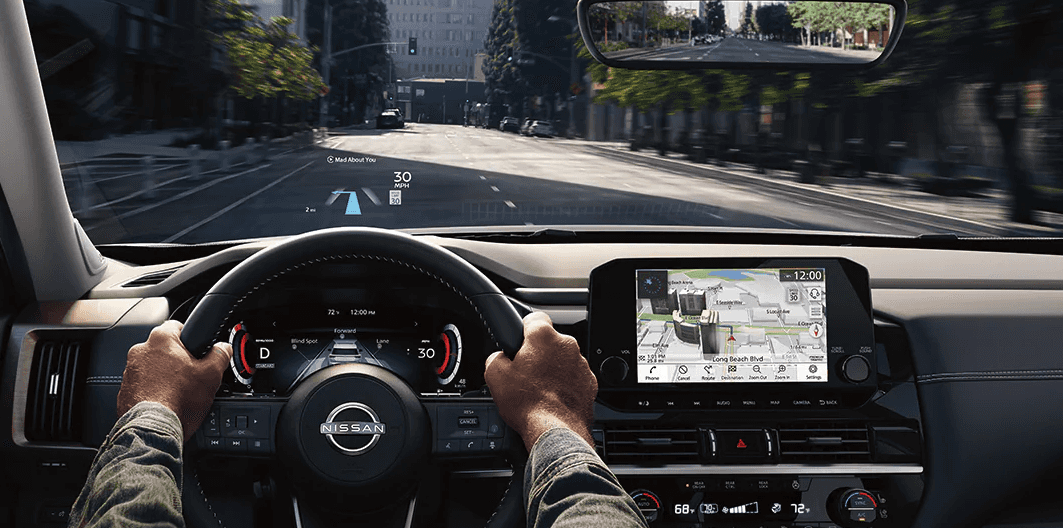
One of the most frustrating parts of towing solo is checking the lights. You usually need a second person to stand behind the trailer while you press the brakes and use the turn signals. Nissan has solved this with the innovative Trailer Light Check system, available via the Intelligent Key fob. By standing behind your rig and pressing a specific sequence on the key fob (usually holding the lock button), the Pathfinder will cycle through all the light functions automatically: left turn, right turn, and brake lights. This allows you to visually verify that every bulb on your trailer is working before you leave your driveway in Oak Lawn. It is a simple feature that saves time and keeps you legal, preventing you from getting pulled over for a burnt-out taillight on your way to the campsite.
Towing Safety and Payload Tips
Safety is paramount when towing, and the Pathfinder supports the driver with advanced technology. Trailer Sway Control is standard on all trims. This system constantly monitors the vehicle’s yaw (side-to-side movement). If it detects that the trailer is starting to sway perhaps due to a gust of wind or a passing semi-truck it automatically applies the brakes to individual wheels to bring the trailer back in line. This intervention happens much faster than a human driver could react. Additionally, the Intelligent Around View® Monitor is a massive help when maneuvering in tight spaces. The “bird’s-eye view” allows you to see the position of your trailer relative to curbs and obstacles. Even more impressive is the dedicated tow hitch view, which zooms the rear camera directly onto the ball mount. This allows you to line up the hitch with the trailer coupler perfectly on the first try, turning a two-person job into a simple solo task.
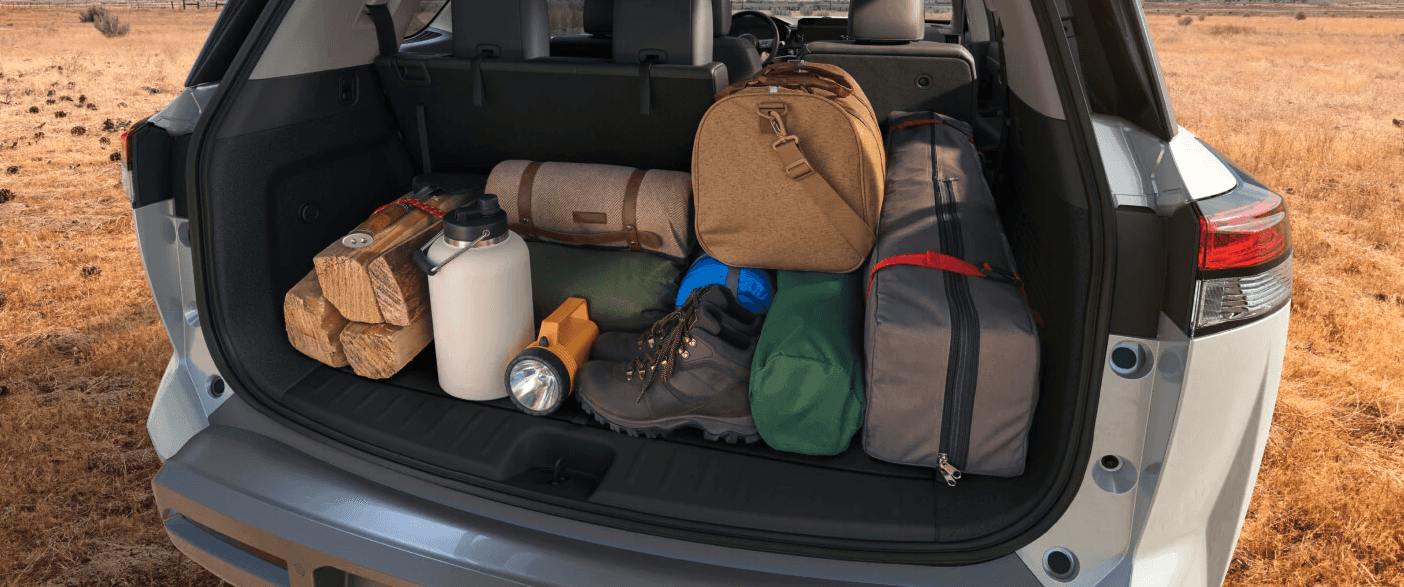
However, technology cannot replace physics. Understanding “payload” is critical. Payload is the total weight of the people, cargo, and tongue weight of the trailer inside the vehicle. If your Pathfinder has a payload capacity of 1,300 pounds, and you have a 500-pound tongue weight (typical for a 5,000-pound trailer), you have 800 pounds left for passengers and luggage. Overloading the vehicle causes the rear suspension to sag, which lifts the front wheels, reducing steering traction and braking effectiveness. To tow safely, always load heavy items in the trailer rather than the car if possible, and distribute weight in the trailer so that 60% of the mass is in front of the trailer axle. This ensures positive tongue weight, which keeps the trailer stable and prevents the dreaded “death wobble” at highway speeds.
Pre-Tow Inspection Checklist
Before you hit the road, a pre-tow inspection is non-negotiable. Start by checking the tire pressures on both the Pathfinder and the trailer. Trailer tires often require much higher pressure (sometimes 50-65 psi) than passenger car tires; running them low causes heat buildup and blowouts. Check the lug nuts on the trailer wheels, as they can loosen over time. Ensure the safety chains are crossed under the trailer tongue (forming an ‘X’) to catch the coupler if it disconnects, and that the breakaway cable is securely attached to the vehicle frame. Finally, verify that your side mirrors are adjusted correctly. If your trailer is wider than the Pathfinder, consider clip-on towing mirrors to see down the sides of the trailer. Taking these ten minutes to inspect your rig ensures that your trip starts and ends safely, protecting your family and your fellow drivers on the road.
Proper maintenance of your Pathfinder is even more critical when you tow. Towing falls under “severe driving conditions” in your maintenance schedule. This means you should be changing your oil and checking your transmission fluid more frequently than the standard intervals. The rear differential fluid also takes a beating when towing heavy loads and should be inspected regularly at Kelly Nissan. We also recommend checking your brake pads more often. Even with trailer brakes, the Pathfinder’s brakes work harder to stop the increased mass. If you feel a vibration when braking while towing, it might indicate warped rotors. Keeping up with this “severe service” schedule ensures that your powertrain remains durable and reliable for the long haul, protecting your investment and ensuring you never get stranded with a trailer attached.
Another aspect to consider is the impact of towing on fuel range. Pulling a large, boxy camper creates significant aerodynamic drag, which can cut your fuel economy in half. The Pathfinder’s 18.5-gallon fuel tank provides decent range, but when towing, you need to plan your fuel stops more conservatively. Don’t wait until the light comes on; start looking for a gas station when you hit a quarter tank. The navigation system in the Pathfinder can help you find stations along your route that are “RV friendly” or have large canopies, making it easier to maneuver your rig up to the pump. Being proactive about fuel management reduces stress and prevents the panic of running low in an unfamiliar area with a 20-foot trailer behind you.
Finally, remember that towing is a skill that improves with practice. If you are new to towing, don’t make your first trip a cross-country voyage. Take your trailer to a large, empty parking lot in Oak Lawn on a Sunday morning and practice backing up. Learn how the trailer reacts to steering inputs remembering that you steer the opposite way you want the trailer to go. Practice making wide turns to avoid hopping curbs. The more comfortable you are with the physical size and handling of your rig, the more relaxed your road trips will be. At Kelly Nissan, we are happy to offer tips and advice to new towers, helping you get the most out of your Pathfinder’s impressive capabilities.
Get Your Pathfinder Tow-Ready at Kelly Nissan
Are you ready to unlock the full potential of your weekends? At Kelly Nissan in Oak Lawn, we can help you find the perfect Pathfinder equipped with the factory Tow Package. If you already own a Pathfinder, our service department can inspect your hitch, install a brake controller, and ensure your vehicle is ready for the heavy hauling season. Visit us on 95th Street to learn more about towing capacities and how the Pathfinder can transform your family adventures.
0 comment(s) so far on Nissan Pathfinder Towing Capacity for Oak Lawn Drivers